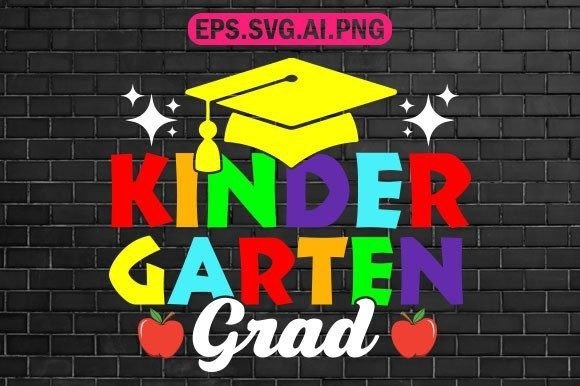
Kindergarten Grad T-shirt Design
A Designer’s First Look: Charm with Quiet Confidence
When I opened Kindergarten Grad T-shirt Design, what struck me wasn’t flash—it was warmth. The layout feels intentionally uncluttered: a central phrase like “My First Graduation!” or “Class of 2025” (depending on the version), likely paired with simple icons—maybe a tiny cap, a star, or a cheerful sun. It doesn’t shout; it smiles. That tone matters deeply when you’re stitching for real people: parents ordering keepsake sweatshirts, boutique owners curating nursery decor, or Etsy sellers building trust through thoughtful handmade product details. This isn’t a bold statement piece—it’s a tender milestone marker. And that makes it quietly versatile.
Where It Shines in Real Embroidery Projects
I recently used a similar design on a set of organic cotton baby onesies for a local boutique launch—and it landed beautifully. Kindergarten Grad T-shirt Design works especially well for soft, meaningful applications: embroidered tote bags for graduation day gifts, lightweight sweatshirt cuffs, pillow covers for a child’s room, or even tea towels for a kindergarten teacher’s farewell basket. Its visual weight sits comfortably between minimal and expressive—enough personality to feel personal, but not so dense that it overwhelms delicate fabric or small hoop sizes.
As a machine embroidery design, it leans into clean lines and open spacing. That means fewer fill-stitch traps, smoother satin-stitch curves on lettering, and breathing room for stabilizer to do its job. I’ve seen versions hold up cleanly on medium-weight cotton blends, French terry, and even lightweight linen-cotton canvas—ideal for aprons or kitchen towels meant for gifting. For commercial embroidery, it scales reliably across sizes: small enough for a cap front, balanced enough for a full chest placement on a toddler tee, and legible enough on a patch meant for backpacks or jackets.
Where to Proceed Thoughtfully
This isn’t a one-size-fits-all embroidery file. Because it’s built as a Graphics asset first—likely optimized for sublimation and print—the stitch logic may not be pre-optimized for every embroidery scenario. If your version includes fine decorative accents (like tiny dots, thin outlines, or script flourishes), those can vanish on stretchy fabric or blur on dark, napped surfaces without proper stabilizer and thread contrast testing.
Be mindful on:
- Curved surfaces—caps or baby beanies—where tight curves may distort letter spacing if digitized loosely;
- Thin or sheer fabrics, where dense fill areas could cause puckering or show-through;
- Textured weaves like bouclé or heavy slub cotton, where fine running-stitch details might get lost;
- Frequent-wash items like kids’ tees or kitchen towels—confirm stitch density supports durability without stiffness.
What It Adds to Your Finished Product—and Your Brand
Embroidery isn’t just decoration—it’s perceived value. Kindergarten Grad T-shirt Design elevates a plain tote bag into a personalized gift. It turns a generic sweatshirt into a keepsake parents will fold and save. That emotional resonance directly affects buyer engagement: customers scroll past generic clipart but pause for something that feels hand-chosen, not mass-downloaded.
For Etsy sellers and craft business owners, this design supports brand consistency when used thoughtfully—paired with cohesive thread palettes (think buttery yellows, sky blues, and warm creams) and consistent placement. It reads as intentional, not incidental. And because it avoids over-the-top novelty, it stays relevant across seasons and classrooms—not tied to one trend or mascot, making it reusable year after year as part of your core design assets.
Practical Notes from the Hoop
Before stitching your first run:
- Test on scrap fabric—especially if using textured or dark material. Watch how letterforms hold at 80–90% size.
- Check thread color contrast in natural light. What reads clearly on screen may fade on navy or charcoal.
- Review stitch density visually in your embroidery software—if fill areas look overly packed, consider simplifying or adjusting underlay.
- Confirm hoop size compatibility. Does the widest version fit comfortably in your most-used hoop? If not, scale thoughtfully—not just uniformly.
- Inspect small details in black-and-white mockups. Will that tiny star or cap icon read at 2 inches wide?
- Use appropriate stabilizer: tear-away for stable wovens, cut-away for knits or baby items that’ll be washed often.
- Verify licensing before selling finished embroidered products or bundling the digital embroidery file. Since it’s listed under Print Templates, confirm whether commercial use is included—or if attribution or limitations apply.
Final Thought: A Thoughtful Tool, Not a Magic Button
Kindergarten Grad T-shirt Design won’t replace your judgment—but it rewards it. Used with attention to fabric, thread, and context, it becomes more than a graphic. It becomes a quiet moment of pride stitched into something real: a child’s first big step, captured not in pixels, but in thread. That’s the kind of detail that turns casual buyers into repeat customers—and transforms a craft business into a trusted source for meaningful handmade product. Just remember: the best embroidery files don’t do the work for you—they give you room to do it well.